This is the single most expensive lesson a homeowner can learn the hard way. The cheapest contractor is almost never the cheapest project. We say this not to sell you on us. We say it because we've spent more time than we'd like to admit fixing other contractors' work after the fact.
It usually starts the same way. A homeowner gets three or four estimates. One number is significantly lower than the others. The pitch sounds good. The handshake feels good. The contract gets signed.
Six months later, we get the call.
Sometimes the project is half finished and the contractor has stopped returning calls. Sometimes the work is done but the inspector won't sign off on it. Sometimes the homeowner has moved in and the foundation is cracking, the addition is leaking, the roof is sagging where it shouldn't be, and the original “cheap” contractor is nowhere to be found, has gone out of business, or is operating under a new LLC name.
The cheapest bid wins the job. The hidden costs win the project.
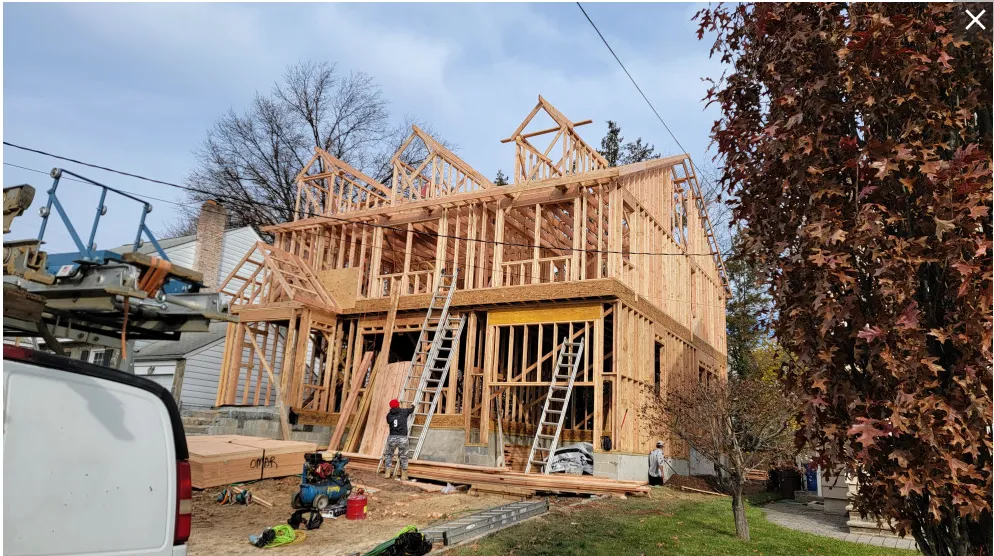
We've watched this play out for 35 years. The gap between a quality bid and a discount bid almost always shows up later, in places homeowners can't see at signing. Cheap framing means a house that flexes when it shouldn't. Cheap waterproofing means a basement that turns into a problem after the first heavy rain. Cheap materials on the parts of a home that should last 50 years means replacing things you shouldn't have to replace at year 8.
What “cheap” usually means in residential construction.
It's rarely that the contractor is just generously charging less. It's that something has been removed, substituted, or rushed:
It might be a thinner grade subfloor, a builder grade window where you specified low E glass, untrained day labor instead of an experienced crew, or skipping the third structural inspection because there isn't time in the schedule. Sometimes it's not using the right size beam in a load bearing wall. Sometimes it's skipping the moisture barrier behind a stone facade because nobody's going to see it for 20 years.
None of these decisions show up on the contract or in the estimate. They show up later, in the parts of your home you can't easily fix without tearing things back open.
What we charge for, and why.
When we give an estimate, we price the project to actually be built right. That means a real crew, real engineering review where it's needed, the materials the architect specified (not a cheaper substitute), the time to do the work properly the first time, and a warranty you can actually rely on if something goes wrong.
It also means we sometimes lose jobs to lower bidders. That's fine. We'd rather not be the right fit for a homeowner shopping primarily on price than be the right fit and cut the corners that have to be cut to get there.
If you're getting bids and one is dramatically lower than the others, ask the contractor to walk you through line by line where the savings are coming from. A real builder can answer that question. A “cheapest bid” contractor often can't, or won't.